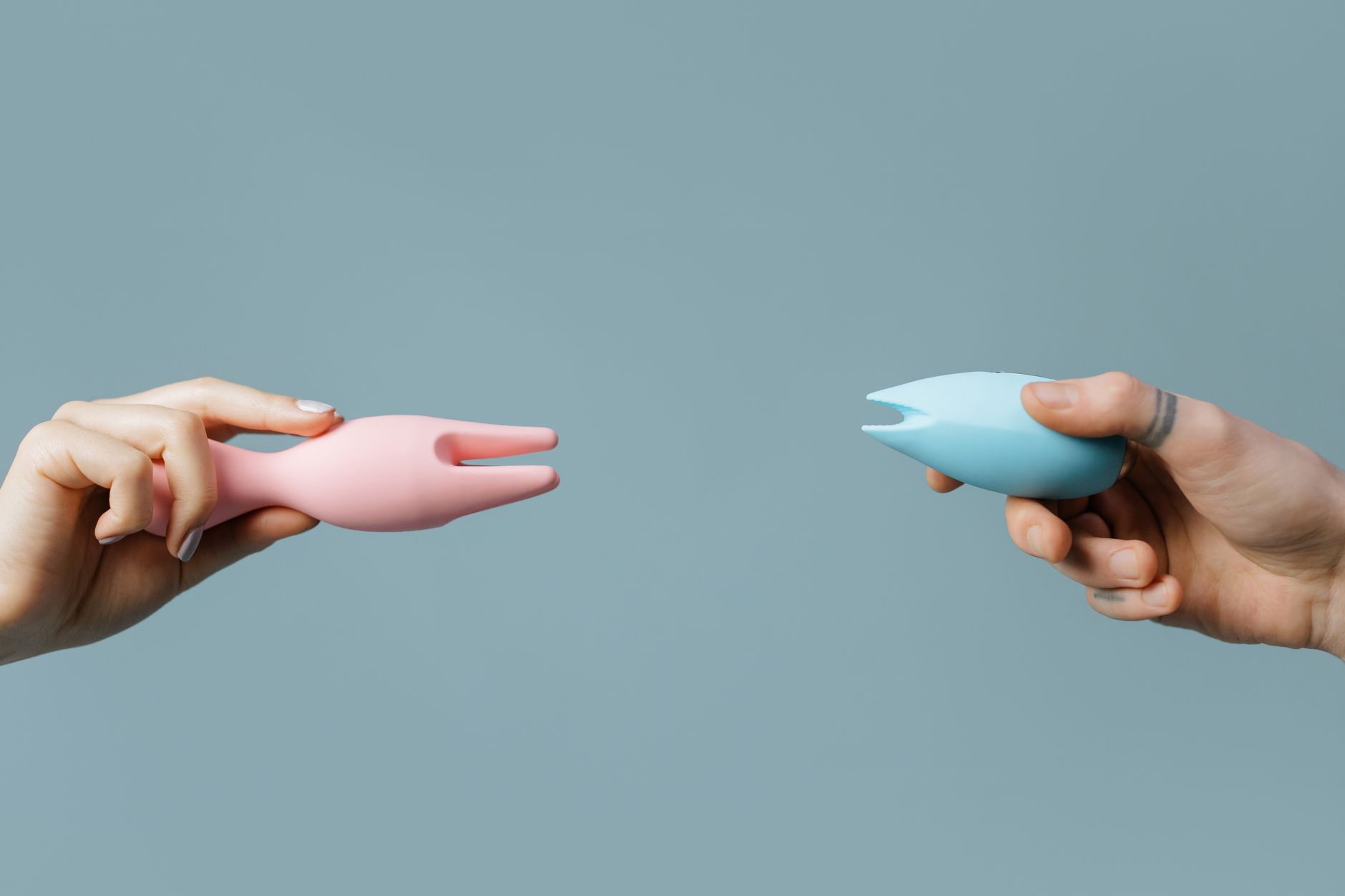
Let's talk about what happens after a breakup ends
Your body has lost a source of physical touch. That's not nothing. Whether the sex was amazing or you're relieved it's over, the absence of that intimate contact rewires how you move through the world for a while. The nervous system needs time to recalibrate. Pleasure might feel distant, unfamiliar, or even uncomfortable to contemplate when you're in active grief.
Here's the thing: using a lemon vibrator during breakup recovery isn't about rushing back to sensation or "proving" you're over it. It's about rebuilding the relationship you have with your own body. That relationship is still here. Your pleasure is still yours.
Why pleasure matters in heartbreak recovery
When relationships end, people often swing to extremes. Either they avoid anything physical entirely (which can extend numbness), or they try to fill the void with someone new immediately. A middle path exists: intentional solo play with a tool like the Lem or another clitoral vibrator.
Psychologically, reconnecting with self-pleasure during recovery does three important things. First, it reminds your nervous system that pleasure is still available. Second, it's a concrete way to practice saying no to anyone else's agenda and yes to your own needs. Third, it rebuilds a sense of autonomy over your body, which breakups sometimes steal.
Most people don't think of vibrators as healing tools. We categorize them as luxury or novelty. But if you're recovering from a relationship where your needs got sidelined, using a lemon vibrator solo becomes an act of reclamation.
The first week is about permission, not performance
Right after a breakup, the urge to use solo play often doesn't show up immediately. That's normal and fine. But when you notice yourself having a moment of curiosity, that's your signal to start. Not because you "should," but because part of you is ready.
The first time back, keep expectations low. You might feel awkward. Your mind might wander to the relationship or guilt or logistics. This is fine. You're not trying to have a mind-blowing orgasm. You're trying to reacquaint yourself with the sensation.
Start with the Lem on the lowest setting and spend about five minutes just noticing how different stimulation patterns feel. No goal. No finish line. The act of touching yourself intentionally, using a tool you've chosen for yourself, is the whole point.
Building a recovery-focused routine around touch
After the first exploratory session, think about creating a small ritual. Not something elaborate. Something simple that signals to yourself: this time is for me.
Set aside 15 to 20 minutes when you know you won't be interrupted. Dim the lights. Maybe light a candle if that feels right (nothing cheesy required). Lock the door if you share a space. Put your phone somewhere you can't see it. These aren't luxuries. They're boundary-setting with yourself.
Use a water-based lubricant even if you don't think you need it. Breakup stress affects physical arousal, and dryness is common. Lube removes friction resistance and lets you focus on sensation rather than mechanics.
Start with the Lem on setting 1 or 2. Work up gradually. There's no rush to orgasm. If you reach one, great. If you don't, that's also completely fine. You're building a new baseline, not chasing a specific outcome.
The role of fantasy during recovery
Some people worry that using a vibrator during breakup recovery means they need to fantasize about their ex, or jump to fantasy about someone new. Neither is required.
Your brain might float to the person you just lost. If it does, that's not failure. You're grieving. But you don't have to stay there. Some people find it helpful to redirect attention to sensation: where the vibrator is touching, how the stimulation feels at different intensities, your breathing.
Others find it easier to have a low-key fantasy ready. This doesn't need to be elaborate. It might be a memory of a moment that felt good (with your ex or anyone else), a scenario you've always wanted to try, or even just an abstract sense of being desired. Whatever keeps your mind in your body and away from the loss narrative.
What to expect emotionally in the first month
Rebuild your pleasure slowly, and some days you'll find yourself crying afterward. This happens. The nervous system processes both pleasure and grief through the same channels. If tears show up after an orgasm, you're not broken. You're integrating.
Other days you'll feel powerful, present, and genuinely good. Hold those moments lightly. Healing isn't linear, and your body's responsiveness will fluctuate.
If you find yourself using a lemon vibrator to avoid processing the breakup entirely, that's worth noticing. Solo play as a tool for reconnection is different from solo play as avoidance. The first happens 2 or 3 times a week and feels grounded. The second happens daily and feels more like escape. If you recognize the second pattern, consider talking to a therapist. Pleasure and avoidance can look similar from the inside.
When to introduce a partner again
There's no universal timeline. Some people are ready for partnered sex weeks after a breakup ends. Others need months. Your readiness isn't determined by how long it's been. It's determined by whether you can be in your body with another person without comparing them to your ex, and whether your pleasure feels like your own again.
One useful marker: if you can use a lemon vibrator solo and feel genuinely present and grounded, that usually means your nervous system has integrated the loss enough to handle a new person.
When you do start dating again, continuing solo play is a gift to yourself and any future partner. You know what feels good. You know how your body responds. You can communicate that. Using a lemon vibrator when you want deeper connection with a partner becomes easier when you've already done the internal work.
The permission piece is everything
Breakups often come with a specific kind of shame or self-judgment about pleasure. If the relationship ended because of sexual incompatibility, you might blame your body. If your ex made you feel bad about masturbation, reclaiming that privately is an act of resistance.
Using a clitoral vibrator like the Lem during recovery is a statement: my pleasure is mine. No one else gets to define it, gatekeep it, or make me feel small for wanting it.
You deserve to feel good in your body again. Not eventually. Now. That process starts with permission and a tool you trust.
FAQ: Using a Lemon Vibrator During Breakup Recovery
Is it normal to feel numb when trying to use a vibrator after a breakup?
Completely normal. Emotional trauma dampens physical sensation. Your nervous system is in protection mode. Numbness is a feature, not a bug. Keep the expectation low for the first few weeks. The sensation will return as grief softens. If numbness persists beyond two months, it's worth checking in with a therapist.
Can using a lemon vibrator make it harder to move forward?
No. The opposite is true for most people. Avoiding all physical sensation can extend the grieving process. Using a clitoral vibrator intentionally, with yourself, actually helps your nervous system integrate the loss and move forward. The key is that it's intentional and present, not compulsive or escapist.
What if I feel guilty using a vibrator because my ex didn't approve?
That guilt is residual control. Your body is yours. A lemon vibrator is a tool for your own pleasure. Using it after a breakup is a concrete way to reclaim that autonomy. The guilt will fade with repetition. Each time you use a vibrator and nothing bad happens, your nervous system learns it's safe.
How long should I wait before trying partnered sex again?
There's no rule. A useful marker: if you can use a lemon vibrator solo and feel present and grounded rather than numb or sad, your nervous system is usually ready for another person. Some people are there in three weeks. Others need three months. Trust your body's timeline.
Should I tell a new partner that I use a vibrator?
Yes, eventually. Not on a first date. But once things are getting physical, transparency helps. Partners who shame you for knowing what feels good aren't keepers. A lemon sucker or other clitoral vibrator is normal, healthy, and nothing to hide.
What if using a vibrator brings up memories of my ex?
That's grief doing its job. Your brain associates touch and pleasure with the relationship. With repetition, you'll slowly build new associations with pleasure that belong only to you. If the memories become intrusive or painful, a therapist trained in grief can help you process that specific piece.
Recovery is not a destination
Breakup healing isn't a finish line. It's a slow unwinding of the nervous system from connection to independence. Using a lemon vibrator is a small, concrete way to tell yourself: I'm worth touch. I'm worth sensation. I'm worth pleasure, even alone.
Start small. Be patient with yourself. Your body will remember how to feel good again. It just needs time and permission.