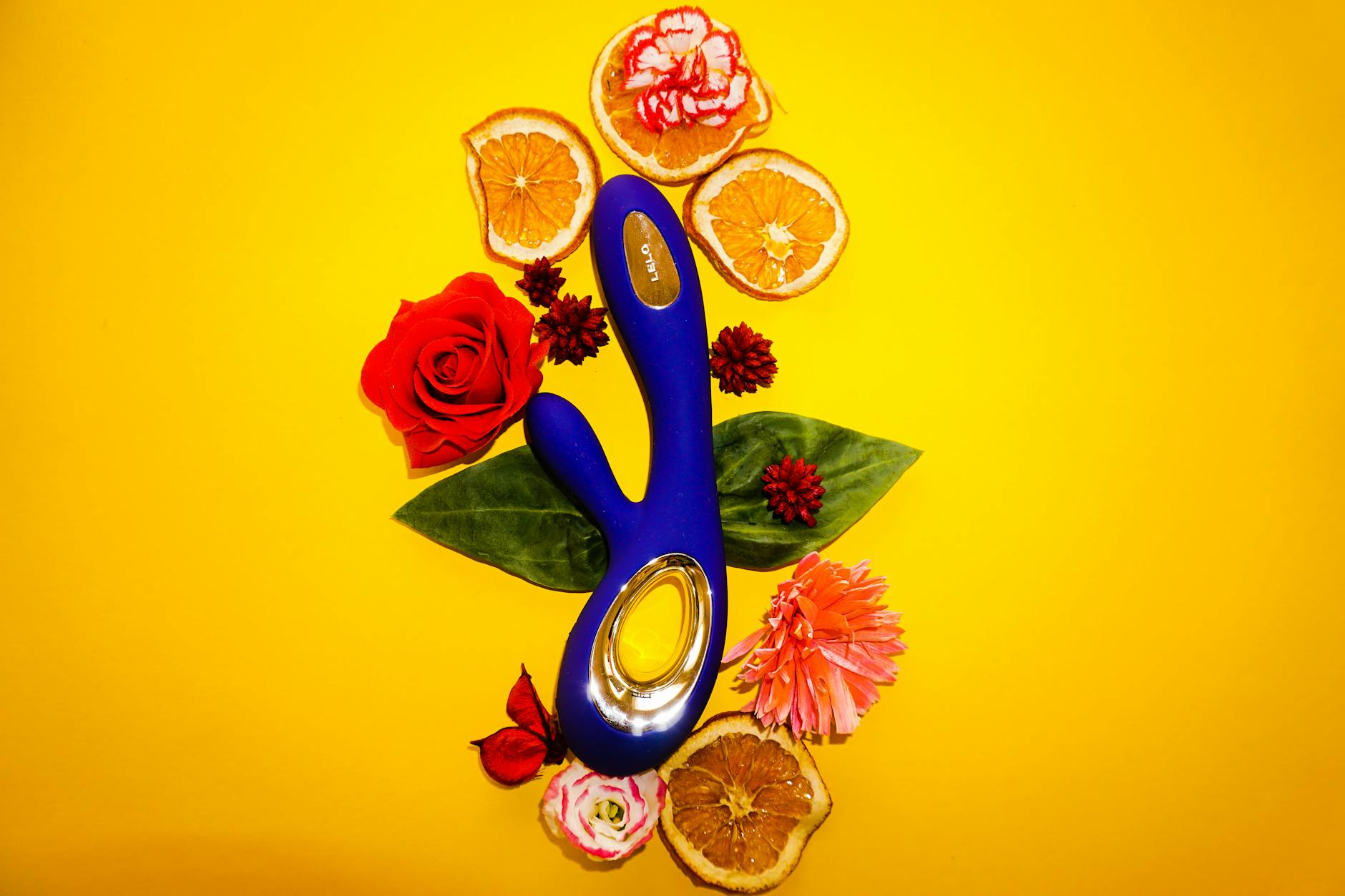
When breakups steal your pleasure
Here's what nobody tells you about healing after a breakup: your body forgets how to want things. Not because you're broken or unlovable. Because for months or years, your pleasure was tangled up with someone else's. Their timing, their preferences, their presence. Now they're gone, and the whole map of desire has to be redrawn.
That's not weakness. That's just how intimacy works. When you've been partnered, your nervous system learns to respond to another person's body, voice, pace. Untangle that, and for a while, you're navigating blind. Your clitoris didn't go anywhere. Your capacity for pleasure didn't evaporate. But your confidence in accessing it needs rebuilding. That's where starting with a lemon vibrator makes real sense.
Why solo pleasure after a breakup feels so different
There's a specific reason this is hard. During a relationship, arousal gets triggered by external cues: a partner's touch, their presence, anticipation of their arrival. That's a collaborative nervous system response. After a breakup, you have to flip that switch alone. Your brain has to produce arousal without another person's body as the primer.
This isn't weakness. This is just biology. Your vagus nerve, your pelvic floor muscles, your hormone patterns all reorganized around shared intimacy. Rewiring that takes intention.
Lemon vibrators, specifically, help because they work with your nervous system rather than against it. Instead of requiring you to generate arousal and then sustain it for penetration (which can feel like pressure), a lemon clitoral vibrator creates sensation that builds arousal. You're not chasing a feeling. The feeling comes to you. That distinction changes everything when you're starting from zero.
The emotional reset you need before touching anything
Here's the part therapists know that sex toy companies won't tell you: your body holds grief. After a breakup, touching yourself can bring up a lot of sadness. Not because it's wrong. Because it's real.
Before you use any vibrator, solo or otherwise, sit with that. Give yourself permission to cry if it comes up. Touch your own skin without expectation. Feel your own heartbeat. This sounds soft, but it's the floor that everything else stands on. If you skip this and jump straight to tools, you end up using them to avoid feeling, not to move through it.
Once you've sat with that rawness a few times, you're ready to add sensation.
Starting with the gentlest patterns
When you pick up a lemon vibrator for the first time post-breakup, start on the lowest setting. Not because you're sensitive (though you might be). Because low settings do something crucial: they let you stay in your body without overwhelming yourself.
Pattern 1 on most lemon adult toys is essentially just light pulsing. It's almost meditative. You can feel it without needing to think about technique or performance or orgasm. You're just introducing your clitoris to the idea that it can feel good again, alone, on its own terms.
Spend several sessions here. Maybe five to ten minutes, a few times a week. Your only job is noticing. Does this feel good? Does it feel better when you adjust the angle? When you add more pressure from your fingers? When you breathe differently?
There's no destination. This is the practice.
Why lemon suction vibrators reset your nervous system faster
The reason I often recommend lemon clitoral vibrators for post-breakup healing specifically is that they use suction, not just vibration. That matters.
Traditional vibrators create stimulation through rapid friction. That mimics partner touch, which can sometimes bring up complicated feelings when you're grieving. Suction-based lemon sexual toys work differently. They create a gentle rhythm of pressure and release. It's distinct enough from partnered sex that your nervous system reads it as something new. You're not recreating what you lost. You're discovering what you can access alone.
The suction pattern also tends to build arousal more steadily than vibration does. There's less of a harsh spike and more of a curve. For people who are anxious or grieving, that gentler arc is almost always more accessible.
Building your solo pleasure practice
After a breakup, pleasure isn't something you find once and keep. It's a practice you rebuild. Here's the actual progression that works:
Weeks 1-2: Lowest setting, maybe five to ten minutes, three times a week. No pressure to orgasm. This is just reintroduction.
Weeks 3-4: Same setting, but longer if it feels good. Up to 15 minutes. Start noticing what patterns make you feel more. You might find rhythm 2 or 3 hits differently than pattern 1. That's information. That's good.
Weeks 5-6: If you want, try a slightly higher setting. Maybe for just a minute or two in the middle of your session. See how your body responds. Back off if it feels like too much. This isn't a race.
Weeks 7+: By now, you've probably found a pattern and a setting that genuinely feels good. Stick with it. Use your lemon vibrator whenever you want to, not because you think you should. That boundary matters. You're learning to listen to your own body again, not perform for anyone, including yourself.
Some people reach orgasm within a few weeks. Others take months. Both are completely normal. After a breakup, the goal isn't orgasm. The goal is reconnecting with the fact that your body is yours, and it knows how to feel good.
When to lean in and when to pause
If at any point this brings up big emotions, pause. Sit with that. Maybe journal about it. Maybe talk to a therapist. Pleasure and grief can coexist, and that's actually a sign you're processing, not that something's wrong.
You might also notice your desire comes and goes. Some weeks you'll crave this practice. Other weeks you'll have zero interest. Both are fine. Forcing pleasure after heartbreak just reinforces the idea that you have to perform. Let your interest lead.
If three months in you're still having zero response, that's worth checking in about with a doctor. Grief can suppress libido, but if it's absolute, there might be something hormonal happening too. It's not a character flaw either way.
Using this practice as part of your larger healing
A lemon clitoral vibrator is a tool, not a solution. It helps your body remember pleasure, but it doesn't heal the grief of a breakup. That happens in time, with support, and with patience toward yourself.
What this practice does is tell your nervous system: I'm safe. I'm allowed to feel good. My pleasure belongs to me. Those messages matter. They're the foundation of moving forward.
Some people find that as they rebuild solo pleasure, their overall resilience increases. They sleep better. They feel less anxious. They stop checking their ex's social media. There's something about reclaiming physical pleasure that signals to your whole self that you're going to be okay.
You will be.
People also ask
Is it normal to feel sad when using a vibrator after a breakup?
Completely normal. Your body holds grief, and solo touch can unlock it. That doesn't mean you're doing something wrong. If the sadness feels overwhelming, pause and come back when you're ready. Healing isn't linear. Some sessions will feel good. Others will feel tender. Both matter.
How long until I feel like I used to with a partner?
You won't feel exactly the same. You'll feel different. That's actually the point. After a breakup, solo pleasure is its own thing. It's not a substitute for partnered intimacy. It's a foundation you rebuild for yourself. Most people report feeling genuinely reconnected to their own body within four to six weeks of consistent (but gentle) practice. But everyone's timeline is different.
Can I use a lemon vibrator if I'm still mourning the relationship?
Yes. Grief and pleasure don't cancel each other out. In fact, for many people, reconnecting with physical sensation is part of moving through grief, not running from it. Your body is still yours. That never changes. Using a tool to feel good again isn't disloyal to the relationship you lost. It's honoring yourself.
What if I don't feel anything at first?
Sometimes numbness comes with heartbreak. That's a protective response. If you're feeling nothing, your nervous system might just be doing what it needs to do. Don't force it. Give yourself permission to just explore without expectation. Sensation often returns once the acute grief passes. If numbness persists for months, that's worth talking to a doctor or therapist about.
Should I tell my therapist I'm using a vibrator?
If you have a therapist, yes. A good one will understand that solo pleasure is part of self-care after a breakup. They might even recommend it as part of your healing practice. There's nothing shameful about this. You're reconnecting with your own body. That's textbook recovery.
Can I transition to partnered sex again after rebuilding with a vibrator?
Absolutely. In fact, many people find their partnered sex improves after they've rebuilt their solo practice. You've relearned what your body wants. You know your own patterns. You can communicate that to a partner. That's a huge advantage. There's no such thing as "too much solo pleasure" or "depending on vibrators." These are tools that help you know yourself better.
You're allowed to want this
Breakups convince you that you're too broken, too numb, or too much of a mess to deserve pleasure. That's the grief talking, not the truth. Your body knows how to feel good. A lemon clitoral vibrator is just permission to rediscover that. If you want to talk through your healing more broadly, that conversation matters too.