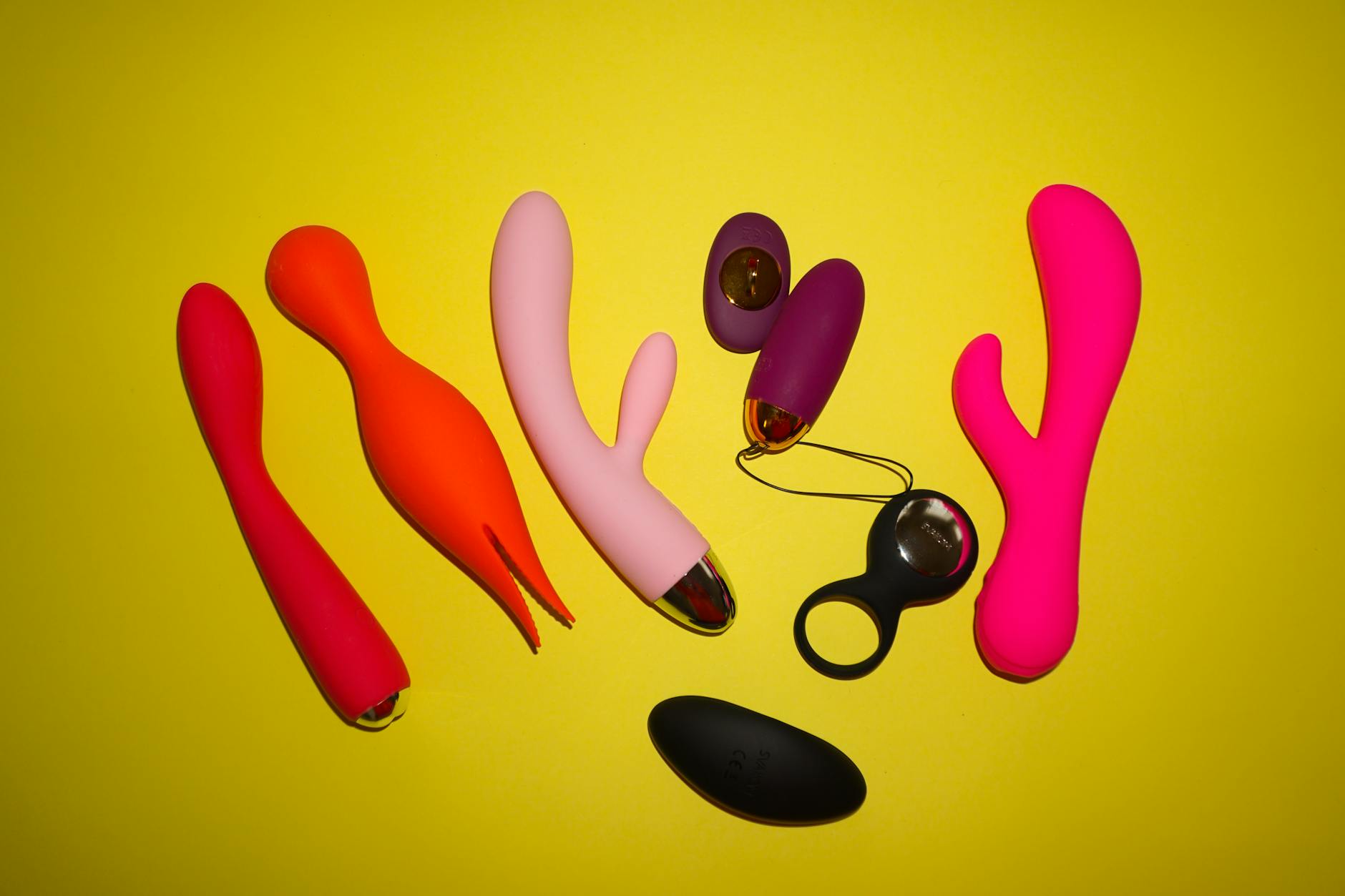
Let's talk about the real tension
You want to explore pleasure tools. Your partner doesn't. This isn't a small incompatibility. It sits at the intersection of desire, shame, autonomy, and trust. And honestly, it's one of the most common relationship conversations I see people avoid entirely.
Here's what happens instead: one person uses toys alone and hides it. Or stops using them to keep the peace. Or brings them up once, gets shut down, and never mentions it again. All of these create a small gap that grows quietly.
The good news? This gap is fixable. The lemon vibrator, specifically, works well in these situations because it's not about replacing anyone. It's about your own sensation. But the real work isn't about the toy. It's about talking.
Why partners resist toys (and it's almost never what you think)
Most people assume resistance is about insecurity. Sometimes it is. But more often, it's about something much deeper: unexamined beliefs about what sex is supposed to look like, fear of doing things wrong, religious or cultural conditioning, or simple unfamiliarity.
I've had partners tell me they worry that bringing a toy into sex means they're failing. Others grew up with the idea that toys are for "sad lonely people," not couples. Some genuinely believe that if you need external stimulation, something is broken about the relationship.
None of those beliefs are about you. They're inherited stories.
The reason this matters? You can't argue someone out of a feeling. You can only create space for them to examine where the feeling comes from.
Starting the conversation (the one before the toy conversation)
Don't open with the lemon vibrator. Open with curiosity.
"Hey, I've noticed you seem uncomfortable when I bring up toys. I'm not trying to pressure you, but I want to understand what's coming up for you. Is it worry about what it means? Something else?" This shift from "I want this" to "Help me understand you" changes everything.
Listen without defending. Your partner might say something you don't like. "It feels like you're not satisfied with me." Let that land instead of immediately fixing it. Then, gently: "I get why you'd feel that. That's not what's true for me, but I hear you."
Here's the distinction that matters: wanting external stimulation has nothing to do with wanting or valuing your partner. A lemon vibrator or any clitoral vibrator provides a specific kind of sensation. Your partner provides intimacy, presence, and connection. These are different things. Most people have never had that separated clearly.
The reframe that actually works
Instead of "I want to use a vibrator," try: "I've learned something about my body. I respond really well to clitoral suction stimulation. I'd love to explore that with you, either by incorporating it into our sex or by having space to explore it on my own. Both feel okay to me."
Notice what changed. You're no longer asking for permission or proposing something threatening. You're sharing information about your body and offering options. "Either with you" removes the idea that toys replace them. "On my own" removes the idea that you're waiting for their approval.
Some partners will still say no to the first option but feel completely different about the second. Some will say, "Okay, show me." Others will need time to sit with it.
The timeline matters here. Don't rush to solution. Plant the seed, then check in a week later. "I've been thinking about what we talked about. Anything come up for you?"
If your partner agrees but seems uncomfortable
Go slow. Introduce the lemon vibrator outside of sex first. "This is what I've been curious about. It's silicone, waterproof, made by Hello Nancy, and the design is really interesting because it uses suction instead of vibration." Let them hold it. Ask questions without pressure. "What's your gut saying?"
When you do integrate it into sex, narrate what's happening. "I'm going to use this for a bit. You don't have to do anything different unless you want to." This removes the sense that they suddenly have new responsibilities. They're not failing if they're not holding it. They're not failing if they don't orgasm from it. They're just present.
After, check in. Not "Did you like that?" But "How did that feel for you?" There's a difference. One is about whether they enjoyed it. The other opens space for them to share actual feelings. Maybe they found it hot. Maybe they felt awkward. Both are information.
If your partner consistently refuses
This is the harder conversation. Because at some point, you have to decide what's non-negotiable for you.
You have three options. One: you let this go entirely and accept that this part of your pleasure won't be explored in your partnership. For some people, the relationship value outweighs the pleasure value. That's a valid choice, if you actually make it consciously instead of drifting into resentment.
Two: you use toys alone, privately, without secrecy. This requires an explicit agreement. "I've decided this matters to me. I'm going to explore it on my own time. I'm not hiding it, and I'm not asking you to participate. But I need you to be okay with it." Some partners need this boundary explicitly stated to feel safe.
Three: this becomes part of larger relationship work with a therapist. Because if your partner is so uncomfortable with your pleasure that they need you to suppress it entirely, that's often connected to other control patterns or intimacy fears worth unpacking together.
I'm not suggesting you blow up your relationship over a toy. But I am suggesting you don't silently abandon your own pleasure to keep the peace. That math doesn't actually keep peace. It creates quiet resentment.
Making space for evolution
People change. Your partner might say no today and feel completely different in six months. Don't treat their current answer as permanent. But also don't use that as permission to keep pushing.
What you're actually doing in this whole conversation is building a relationship where pleasure is discussable. That's bigger than the lemon vibrator. It's about trust, autonomy, and the idea that you can want different things and still choose each other.
That foundation matters more than whether the toy ever makes it into your bedroom.
The FAQ section
How do I know if my partner's resistance is actually about insecurity?
Ask them directly. "When I mention toys, you seem to shut down. I'm wondering if you worry that me using one means something about how I feel about you." Their answer will tell you everything. If they say yes, you can address the specific fear. If they say "No, I just think it's weird," that's different work. One is emotional reassurance. One is unlearning cultural conditioning.
Can using a lemon vibrator alone make my partner more resentful?
Only if you hide it or if the hiding creates distance. If you've had an explicit conversation and agreement, your solo exploration is actually a healthy boundary. If you're sneaking around, yes, that erodes trust. Transparency changes everything.
What if I feel like I'm begging for basic pleasure?
You might be. And that's worth examining in a deeper way. Does your partner resist your pleasure in other areas too? Do you feel generally unsupported? Sometimes toy resistance is the visible part of a larger pattern where your needs don't matter as much as keeping them comfortable. That's not a toy problem. That's a relationship problem.
Is it possible my partner will eventually want to use the lemon vibrator with me?
Absolutely. The resistance softens when shame softens. That happens through repeated, non-pressuring exposure and conversation. I've seen partners go from "I'd rather not" to "That was actually kind of hot" over time. But you can't push that timeline. You can only create conditions for it.
If my partner won't budge, should I end the relationship?
That depends on how much this matters to you and whether pleasure is the only compatibility gap. If you're in a relationship where your needs are consistently minimized, a toy is a symptom, not the problem. If this is one isolated area of friction and everything else works, you get to decide if that trade-off is worth it. There's no universal answer.
What if I try the conversation and it goes badly?
Then you have information. You know this person either can't talk about pleasure in a mature way or isn't willing to try. That's not a failure. That's clarity. And clarity lets you decide what comes next.
One more thing
Your pleasure matters. Not as much as your relationship, but not less than your partner's comfort either. You're allowed to want what you want, to explore it thoughtfully, and to expect your partner to sit with feelings about it like a grown person. A lemon vibrator isn't rebellion. It's just you, knowing your body better.
If you're ready to have this conversation and need a place to start, reach out at /contact. Sometimes talking it through with someone trained in these conversations makes the difference.