
Here's the thing about restarting
Anxiety about pleasure isn't really about pleasure. It's about the gap between who you were and who you are now. You've taken time away. Maybe months, maybe years. Maybe because life got loud, or because it didn't feel safe, or because you weren't sure if you'd still like the same things. The fear isn't "will this feel good." It's "will I feel like myself again."
The good news is that your body remembers. The nerve endings don't need retraining. What needs rebuilding is permission, and that's where a lemon clitoral vibrator actually changes the game. The suction mechanism is gentler than traditional vibration. It's more forgiving on first attempts. And it creates a kind of guided experience that quiets the "am I doing this right" voice in your head.
Why anxiety specifically blocks pleasure
When you're nervous, your nervous system shifts into a low-grade alert state. Blood doesn't flow as freely to the clitoris. The pelvic floor tightens. Arousal becomes harder to build because part of your brain is still waiting for the other shoe to drop. This isn't a personal failure. It's a neurological fact.
Suction devices like the Hello Nancy lemon vibrator work differently than traditional vibrators precisely because of how your nervous system resets during those first few attempts. Instead of the intensity of direct vibration, you get a rhythmic pressure that actually soothes the parasympathetic nervous system. Your body registers it as safe stimulation, not demanding performance.
Starting small is the whole point
The Lem comes with five intensity settings. Most people anxious about restarting start on setting one or two. That's not a sign you're not ready. That's intelligence.
Here's what happens when you start low: you learn your body's actual response without the pressure of "big sensation." You get to notice that yes, things still feel good. Yes, arousal still happens. Yes, you're still capable. By the time you reach setting three, you're not discovering that. You're celebrating it. The difference between those two experiences is everything.
Give yourself permission to stay on a low setting for multiple sessions if you need to. Your anxiety isn't asking you to prove something. It's asking you to go slowly enough to feel safe.
Building a ritual that says "this is mine"
Anxiety thrives in ambiguity. It loves the question "but what if." A ritual removes the question mark. It says: this time is designated, this space is safe, this is just for me.
Three elements that help:
Time. Pick the same time of day if you can. Morning, afternoon, before bed. Your nervous system loves predictability. It starts to relax a little when it knows what's coming.
Space. Even if it's just your bedroom with the door closed, create a boundary. No phone nearby. No half-attention. Your system needs to believe this is protected time.
Breathing. Before you turn on the Lem, spend thirty seconds on intentional breath. In for four, hold for four, out for six. This is the fastest way to shift your nervous system from alert to open.
Then turn it on. Stay with whatever you feel. That feeling is permission to feel more next time.
What anxiety masquerades as (and what it actually is)
Sometimes restarting anxiety looks like numbness. "I'm not feeling anything." That's normal. Your body has been protecting itself. Sensation takes time to return.
Sometimes it looks like pressure. "I should be coming by now." That's anxiety speaking, not your body. Orgasm isn't the goal when you're rebuilding. Sensation is. Comfort is.
Sometimes it looks like something is wrong with you. "Maybe I've changed." Maybe you have. That's okay. The pleasure you felt at twenty is not the same pleasure at thirty-five or forty-five. That's not loss. That's evolution. And a lemon clitoral vibrator is specifically designed to work with your actual neurology now, not with a fantasy version of how you used to respond.
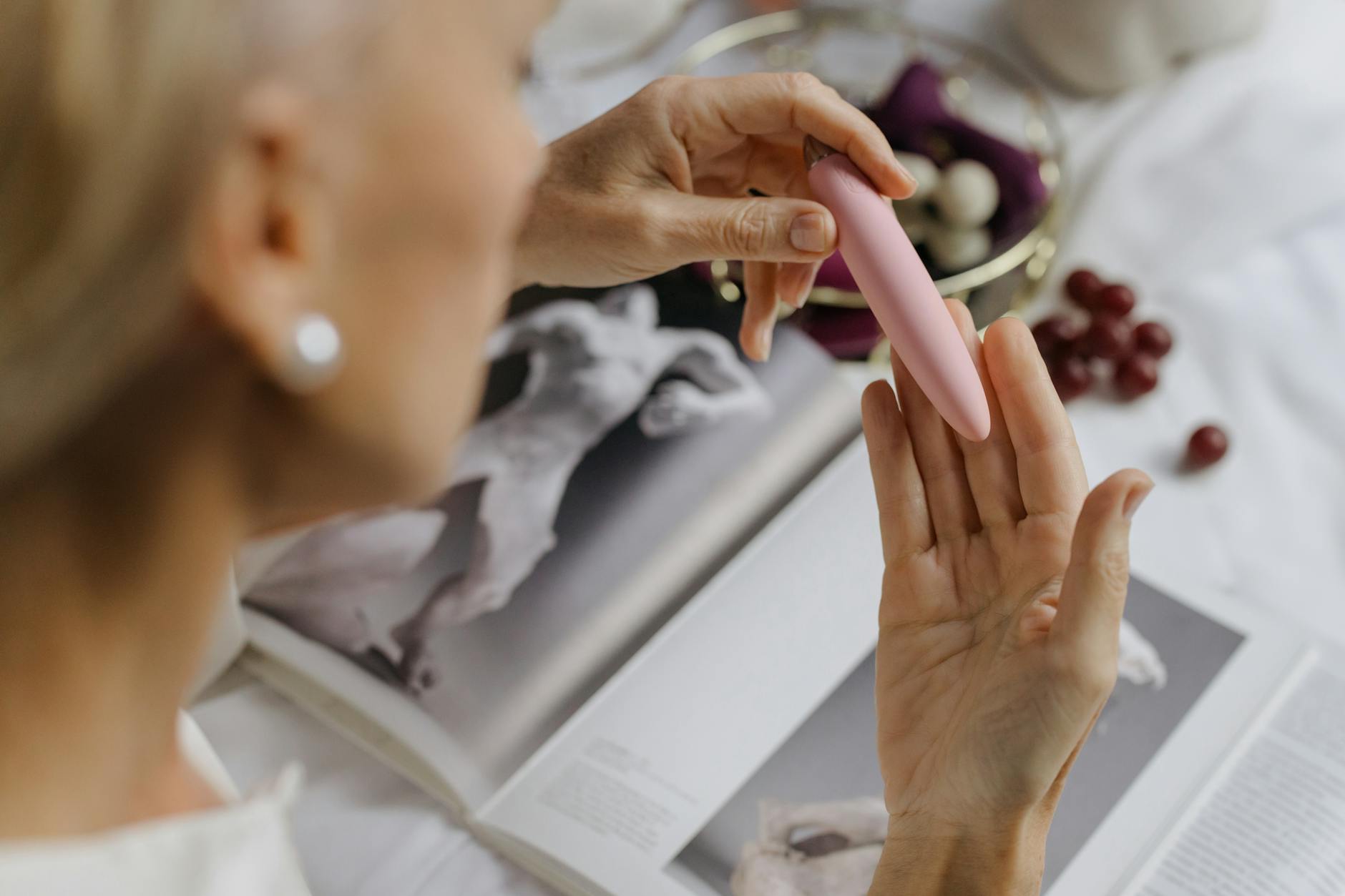
Photo by cottonbro studio on Pexels
The three-session reset
I recommend thinking of your first three sessions as baseline data, not performance benchmarks.
Session one: Turn on the Lem at setting one. Touch it to the area around your clitoris for maybe two minutes. Don't chase sensation. Just notice what's happening. How does your body respond? Does your breath change? Do you feel any warmth? This is all information.
Session two: Try thirty seconds at setting one, then thirty seconds at setting two. You're learning the difference between the intensities and what your body prefers. You're building evidence that you know what you like.
Session three: You can stay with what felt good or experiment a little more. But here's the key: you've now proven to your nervous system that this is safe. That you can restart. That pleasure is still available to you.
After three sessions, anxiety often drops significantly. Not because something magical happened. Because your body has evidence that the thing you were afraid of turned out to be fine.
When to name the anxiety out loud
If you're restarting with a partner, some of the anxiety is relational, not just neurological. They might feel rejected by the pause. You might feel vulnerable being seen during the rebuild. That's real and it deserves words.
Simple honest statements help: "I'm nervous about this, and I'd like to take it slow." "I need this to feel safe first." "I want you here, but not watching right now." A good partner hears that as care, not rejection. And if they don't, that's information too.
If you're restarting solo, you're building a baseline of confidence that then translates to partnership. There's no rush. Solo exploration is not a stepping stone to partnered sex. It's valid on its own.
The difference between anxiety and pain
Here's what matters: anxiety feels like worry. It lives in your head and chest. Pain lives in your body. It's localized and sharp.
If you feel sharp pain, stop. That's your body saying no. That might mean you need more lubrication. That might mean you need to wait and try again later. That might mean something else is going on that deserves medical attention.
But anxiety, even intense anxiety, is something you can move through. And the suction action of a lemon vibrator is gentler on anxious, tense tissue than vibration alone. It feels less like an assault and more like a conversation your body recognizes.
What happens after the reset
Once you've proven to yourself that restarting is possible, pleasure usually becomes less fraught. Not because the anxiety disappears entirely. But because you now have evidence that it's manageable. That you're capable. That your body still knows how to respond.
Some people find that after a few sessions, they want to explore more. Different settings, different durations, different times of day. Others find that they're happy with a simple ritual they've built. Both are wins. You're not aiming for some standardized version of pleasure. You're rebuilding your own.
FAQ: Restarting with anxiety
What if I feel numb the first time I use a lemon vibrator after anxiety?
Numbness is your nervous system's protective reflex. It doesn't mean you're broken or that clitoral vibrators won't work for you. It means your body is still cautious. Keep returning. Sensation usually unfolds slowly, over sessions, not in moments. If numbness persists after five to ten sessions, check in with a pelvic floor specialist or therapist. Sometimes anxiety gets tangled with other physical patterns that benefit from professional support.
Should I use lube if I'm restarting and anxious?
Yes, always. Water-based lube reduces friction and makes the experience feel less intense, which helps your nervous system relax. It's not about needing it. It's about removing an extra variable that could trigger more anxiety. One less thing to worry about means your body can focus on actually feeling good.
Can I use a lemon clitoral vibrator in the dark?
Absolutely. Some people find darkness helps with anxiety because there's less self-consciousness. Others find that soft light grounds them better. Try both. Your preference is the right answer.
How long should I wait between sessions when restarting?
There's no universal timeline. Some people benefit from every other day. Others prefer once a week. What matters is consistency and feeling ready. If you're forcing sessions because you think you "should," that's anxiety talking, not pleasure calling. Listen to your actual desire, even if that desire is small at first.
What if my partner wants to help me restart but I feel self-conscious?
Self-consciousness during vulnerable moments is normal. You have a few options: ask your partner to be in the room but not watching. Ask them to leave the room completely. Ask them to help with a step, like holding the lube, so it feels collaborative without being directly intimate. Clear communication about what you need transforms this from a scary moment into actual partnership.
Does anxiety mean I should see a therapist before trying a lemon vibrator?
Therapy is always valuable. And you don't need permission from a therapist to explore your own body. You can do both. Start the exploration while you're looking into therapy support if the anxiety feels heavy. The two things support each other.
The permission you're actually looking for
Anxiety about restarting isn't really asking for technique advice or product recommendations. It's asking: "Is it okay for me to want this again. Even after the pause. Even after the doubt. Even if I'm not the same person I was."
Yes. It's okay. Your pleasure matters now just as much as it did before. A lemon vibrator doesn't fix anxiety. But it does create a gentler entry point. Something that says: you don't have to prove anything. Just come back slowly. Your body's still here. Still capable. Still deserving of feeling good.
Start with the lowest setting. Stay for two minutes. Notice what happens. That's not starting over. That's starting fresh. And that's enough.
Ready to explore at your own pace? Hello Nancy is here whenever you are. Shop lemon vibrators today or reach out if you have questions.