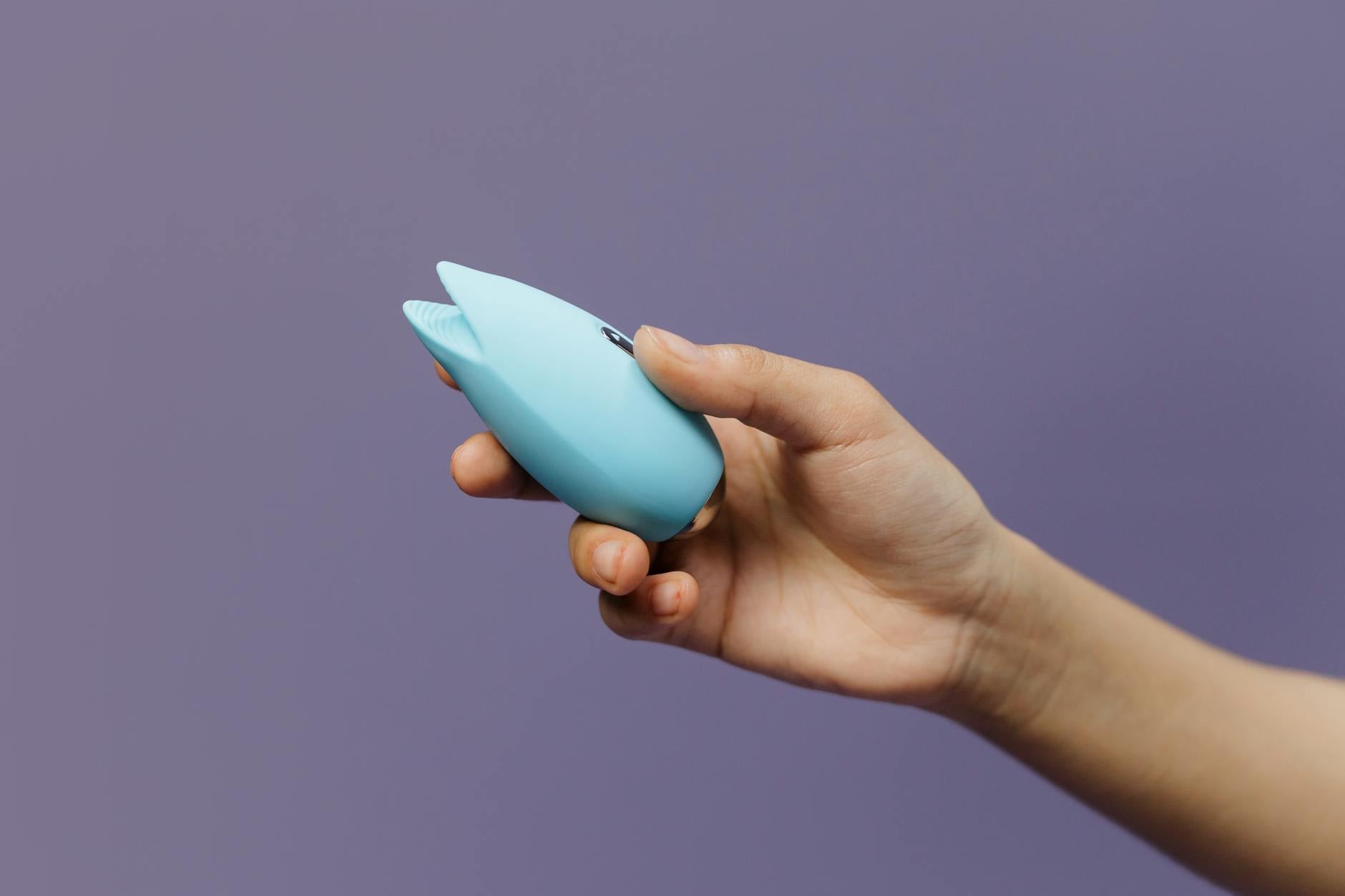
Here's the thing about introducing toys when your partner is hesitant
Your partner isn't opposed to toys. They're opposed to feeling inadequate, judged, or like the relationship wasn't enough. That's a different conversation entirely. The moment you frame a lemon vibrator as "something we could try together" instead of "something you need," the energy shifts completely.
I've worked with hundreds of couples navigating this exact friction. The ones who succeed don't have perfect communication skills. They have clarity about what they actually want and why. Let's build both.
Why your partner might resist (and it's not what you think)
Most resistance isn't about the toy itself. It's about what the toy seems to mean. Here are the real fears underneath the surface objections:
"Am I not enough?" They worry you're bored or unsatisfied with what you have together. A lemon clitoral vibrator feels like evidence.
"Will this change us?" Change feels unsafe, even good change. Your partner might be worried that introducing toys means you're becoming someone they don't recognize, or that the relationship is heading somewhere unfamiliar.
"What if I can't do what that does?" Comparison anxiety. They've mentally cast the toy as competition and they're already losing.
"This feels like too much, too fast." Your partner may feel pressured or like boundaries are collapsing. Adding anything new to intimacy when trust is still being built reads as a red flag.
None of these are about the lem vibrator's suction patterns or intensity settings. They're about safety, belonging, and feeling wanted for who they already are.
The conversation that actually works
Timing matters. Don't open this discussion during sex, right after sex, or when either of you is stressed.
Start with context, not the toy. "I've been thinking about how we connect physically. I really enjoy what we do together, and I'd like to explore a little deeper with you. I found something that might be fun to try. Can we talk about it?"
This frame does three things: it affirms what's working, it positions exploration as mutual ("with you," not "on you"), and it gives them permission to say no without blame.
Then listen. Let them tell you what they're actually worried about. Most people will name their fear if you ask. "What's coming up for you?" is better than "Why are you being weird about this?"
Address their actual concern, not the toy. If they say "I feel like I'm not enough," you respond: "That's not it at all. I'm attracted to you. I love what we do. This is about wanting more of something we both enjoy. Not replacing anything."
If they're worried about performance, separate the two roles. "This isn't about you doing it. It's about us using it together. You're involved the whole time."
Why a lemon clitoral vibrator specifically works better with hesitant partners
Lemon vibrators, particularly the lem vibrator, have a gentler introduction because they don't look clinical. The design is approachable. The sensation is novel without being intimidating. It's not a vibration that feels like someone else's hand or a threat to your partner's involvement.
Start with the lowest intensity setting. Hand control to your partner first. Let them watch it, feel it on their own hand, understand how quiet and gentle it actually is. Fear dissolves when curiosity replaces the unknown.
Most partners who were nervous report that once they felt how it works and saw it in action, the resistance evaporated. It's not what they imagined. It's not scary.
Three ways to introduce it together without making it weird
1. The honest experiment. "I want to show you something. It's not a big deal. It's just something I'm curious about." Keep the tone casual. You're not auditioning for approval. You're sharing something. There's a difference.
2. The collaborative discovery. Let them initiate the next step. "Here, you hold it. Just see what happens." Give them agency. Control is the antidote to vulnerability.
3. The slow integration. Use it together without pressure toward orgasm. Just exploration. Maybe during foreplay one night, you're both just seeing what it feels like. No performance metrics. No goal. Just sensation.
Your partner will relax when they realize that using lemon sexual toys together doesn't require them to be someone different or do something they're uncomfortable with. They just need to be present.
What happens if they're still not interested
Then you have a different conversation. A toy isn't the issue. The reluctance might signal something else: fatigue, disconnection, stress, past trauma, or mismatched desires that go deeper than one conversation can fix.
That's when a couples therapist can help you untangle what's really going on. Sometimes the toy question is just the surface issue. A good therapist will help you both get to what actually matters.
But most of the time, when the conversation is gentle and your partner feels genuinely safe, they're willing. Not because they were wrong to be hesitant. But because you made the space for yes.
If your partner wants to use it solo first
Let them. This actually builds trust, not distance. They're exploring their own comfort. They're getting familiar with lemon adult toys on their terms. When they come back to you and say "okay, I'm ready," they're coming with curiosity instead of anxiety.
Don't make them prove anything. Don't ask for a detailed report. Just keep the door open. "I'm glad you're comfortable with it now."
The real payoff
Couples who successfully introduce toys together often report that the conversation was more connecting than the physical part. Because you did something hard together. You got vulnerable, you listened, you cared about their feelings, and you found a yes anyway.
That's not about the lem vibrator. That's about knowing your partner wanted you to feel good enough to take the risk of asking. And you cared about their feelings enough to explain, listen, and move at their pace.
The clitoral vibrator is just the thing. The real intimacy is the conversation.
People also ask
What if my partner thinks wanting to use toys means I'm not satisfied with them?
That's the core fear. You need to separate pleasure from satisfaction. You can be completely satisfied with your partner and still want to explore. Think of it like food. You can love cooking with someone and also want to try a new restaurant. Neither replaces the other. Say this directly: "I'm satisfied with you. I want to add more experiences with you. That's different."
Is it okay to use a lemon vibrator without telling my partner?
No. Honesty here matters. If you're hiding it, your partner will eventually find out, and that breaks trust in a way that's harder to repair than a conversation beforehand. The secret is often worse than the tool. Be upfront, even if it's awkward.
How do I know if my partner will be open to lemon clitoral vibrators?
You don't until you ask. But there are soft signals. If they're curious about your pleasure, if they ask questions, if they're playful about sex, those are green lights. The conversation itself is low-risk. The worst outcome is "not right now," which is manageable.
Should I surprise them with a toy or ask first?
Always ask first. A surprise feels like you're imposing something intimate without consent. Even if your intention is playful, it lands wrong. The conversation is the gift. The toy is just the follow-up.
What if they say no and I really want to explore lemon sexual toys?
Then you have a choice. You can explore solo, which is completely valid and separate from partnered sex. You can revisit the conversation later when more trust is built. Or you can accept that this particular thing isn't part of your relationship, and that's okay. Don't use toys as a proxy for a larger intimacy problem. If you're feeling disconnected, address that directly.
How long should I wait before bringing it up again if they said no the first time?
Wait at least a few weeks. And only bring it back up if the context has changed. Don't keep pushing. That feels like you're not respecting their boundary. If they've warmed to the idea themselves, that's different. But you shouldn't be the one re-initiating the same conversation repeatedly.