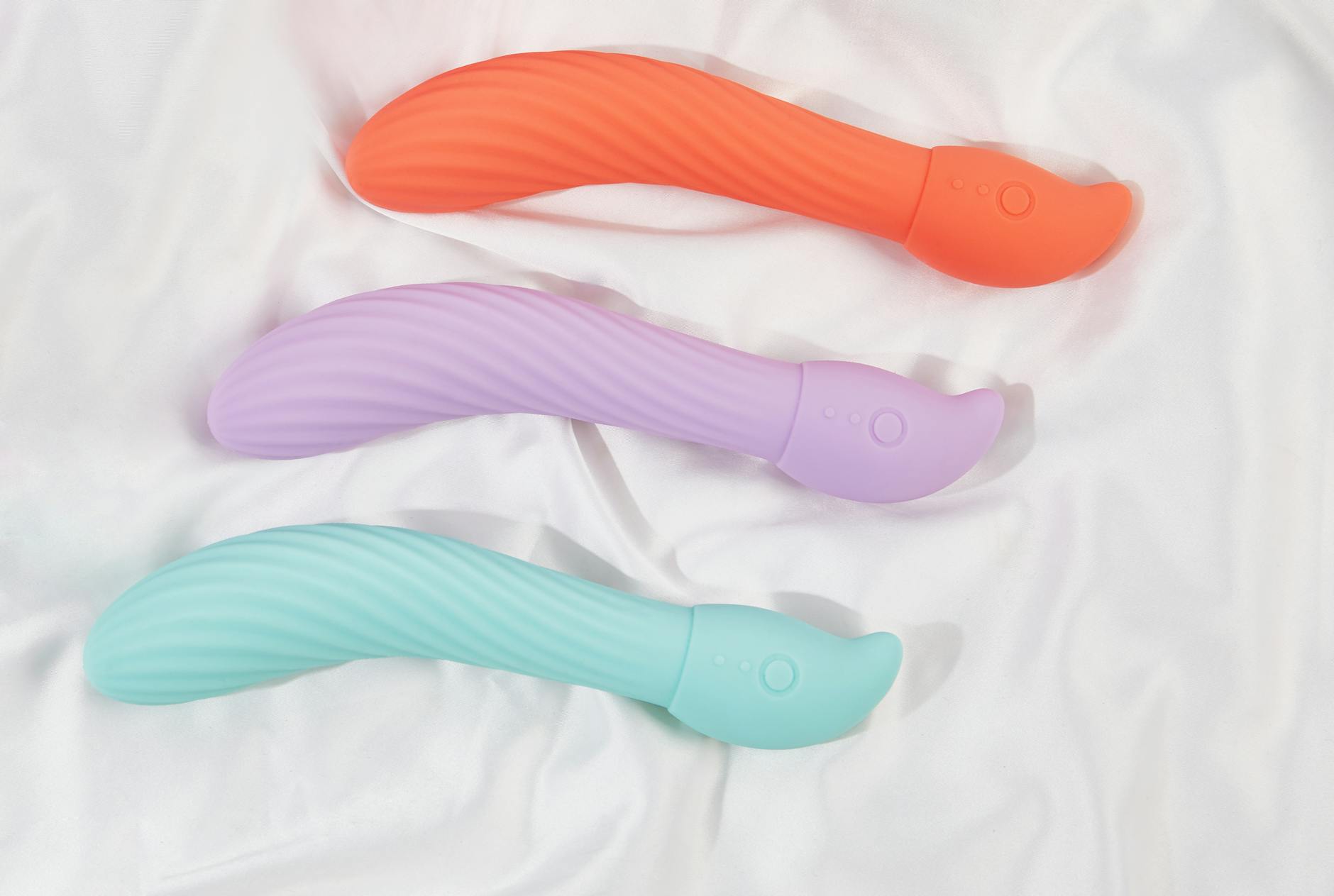
Let's talk about the vibrator you've been avoiding
You're dealing with dryness. Maybe it's from menopause, medication, hormonal birth control, or just your body's natural rhythm. You've tried lube. You've tried waiting longer. And then someone handed you a traditional vibrator and it felt like sandpaper on raw skin.
So you stopped.
Here's what I need you to know: that wasn't your body failing. It was the wrong tool.
Why traditional vibrators hurt when you're dry
A standard vibrator works through direct friction and vibration. It needs consistent contact with tissue to do its job. When you're dealing with vaginal dryness, that friction becomes painful quickly, even with lube.
Your vulva and vaginal opening aren't just less lubricated when you're dry. The tissue itself changes. It becomes thinner, more fragile, and more prone to irritation. A vibrating head moving back and forth creates micro-tears you can't see but absolutely feel.
Add to that the fact that many people with dryness have become protective of their body without realizing it. Your pelvic floor tightens. Your body is anticipating pain. So when a vibrator touches down, your muscles clench, making everything worse. It's a feedback loop.
Lemon clitoral vibrators work on a completely different principle.
How suction changes everything
A lemon-style vibrator doesn't vibrate against your tissue. It creates a gentle suction sensation that stimulates the thousands of nerve endings in your clitoris without requiring direct friction.
Think of it this way: instead of an electric toothbrush scrubbing your teeth, it's more like a soft kiss creating gentle pressure. The stimulation happens through suction and subtle pulsation, not through the vibrator physically moving across dry skin.
This matters wildly when you're dealing with dryness because suction doesn't depend on lubrication to feel good. Your clitoris doesn't need a slippery surface for suction to work. The sensation is also more focused and less intense on the surrounding tissue, which means less irritation and less micro-tearing.
I've had clients who thought they'd lost the ability to orgasm during menopause switch to a suction-style vibrator and come back stunned. "It didn't hurt," they say. "I forgot what that felt like."
The lube conversation needs reframing
If you're dealing with chronic dryness, lube is still part of the picture. But not in the way you might think.
With traditional vibrators, lube is a necessity for basic comfort. With a lemon clitoral vibrator, lube becomes optional, not mandatory. Some people find a small amount of water-based lube adds an extra layer of comfort or helps the suction seal better. Others find they don't need it at all.
The freedom matters. You're not spending the entire experience worried about whether the lube is holding up or if you're going to start burning the second you slow down.
When dryness is medical
Here's the thing: if your dryness is genitourinary syndrome of menopause (GSM), medication-related, or from hormonal changes, a new vibrator helps, but it's not a substitute for medical care.
Topical estrogen creams are genuinely transformative for GSM. They actually reverse some of the tissue changes, not just mask the symptom. If you're postmenopausal and experiencing dryness, talk to your doctor about vaginal estrogen creams. They're underused because people feel awkward asking, but they work in about four to six weeks.
If your dryness is from antidepressants or other medications, there are options too. Some people benefit from testosterone cream. Others find that simply knowing the cause takes the shame out of it.
Point is: use a lemon clitoral vibrator because it feels amazing and doesn't hurt. But also address what's actually causing the dryness if you can. Both things at once is the most complete approach.
How to actually use a suction vibrator when you're dry
The technique is different from what you're used to.
Start with the lowest setting. A lemon vibrator at setting one or two is completely different from a traditional vibrator at low. The suction sensation is more subtle, which means you can spend more time exploring what feels good without feeling overwhelmed.
Position matters more with suction vibrators. You want the opening of the suction cup sealed directly over your clitoris or the area around it. A light touch at first. You're not pressing hard. Let the suction do the work. Many people with dryness tense up without realizing it, so consciously relaxing your pelvic floor before you start makes a massive difference.
If you add lube, a little goes a long way. Water-based only, since silicone lube can degrade silicone toys. A pea-sized amount on the rim of the cup is usually plenty.
Budget time. Dryness often means arousal takes longer to build, and your body might need more warm-up than it did before. Fifteen to twenty minutes is normal. This isn't slow or broken. It's just how your body works right now.
What to expect as your body adjusts
The first time you use a suction vibrator after months or years of avoiding pleasure because of pain, your nervous system might not know what to do with a painless sensation.
You might feel more sensation than you expected. Your clitoris might feel extra sensitive because it's been avoided for so long. That's normal. You can dial back the intensity, and sensitivity often normalizes after a few sessions as your nervous system realizes this is safe.
Some people report that their orgasms feel different on a suction vibrator compared to traditional vibes. Often more concentrated, sometimes slower to build but more intense when they arrive. That's not wrong. It's just different.
The confidence piece
I work with a lot of people who've avoided pleasure because of discomfort. What I notice is that the physical fix, like switching to a lemon vibrator, matters less than the permission to try again.
When you've experienced pain during something that's supposed to feel good, your brain learns to avoid it. You don't even consciously decide. Your body just shuts down the moment anything gets near the area. A tool that doesn't hurt helps you unlearn that pattern.
Use this as permission to explore your own pleasure without fear of pain. Your dryness is real and valid. And your body absolutely deserves to feel good.
FAQ on Lemon Clitoral Vibrators and Dryness
Can I use a lemon vibrator if I have severe vaginal dryness?
Yes, absolutely. In fact, a lemon clitoral vibrator is often better than traditional options precisely because it doesn't require friction. The suction sensation works beautifully on dry tissue. That said, if your dryness is causing pain during any sexual activity, talk to your doctor about topical treatments. A vibrator enhances pleasure but shouldn't be your only solution if pain is present.
Do I need special lubricant for a lemon suction vibrator?
No. Many people use no lube at all with lemon clitoral vibrators. If you choose to use lube, stick with water-based only, since silicone-based lubes can degrade silicone toys. A tiny amount is usually enough to help the suction seal if that's your preference.
Will a suction vibrator work if my clitoris is desensitized from dryness?
Often yes, though it might feel different at first. Desensitization usually comes from avoiding the area because of discomfort, not from actual nerve damage. A lemon vibrator removes the pain factor, which lets your nervous system start rebuilding its response. Give yourself at least three to four sessions before you decide if it's working for you.
How long does it take to see a difference with dryness when using a lemon clitoral vibrator?
Many people notice a difference in comfort on the first use since there's no painful friction. Changes in sensation, arousal, or orgasm can take a few sessions as your body adjusts to a new tool and your nervous system learns that pleasure is possible again.
Should I treat my dryness medically before trying a lemon vibrator?
You can do both. A lemon vibrator helps immediately with comfort during self-pleasure. Medical treatment like topical estrogen creams addresses the underlying cause and can take four to six weeks to show full effects. Having both on your side is ideal.
What if a lemon vibrator still feels uncomfortable?
There are several reasons this might happen. Your pelvic floor might be very tense, the suction strength might be too intense even on the lowest setting, or you might need more warm-up time. Try placing the vibrator over the area around your clitoris rather than directly on it. Experiment with very short sessions, just a minute or two. And if pain is present, definitely see a healthcare provider before continuing.
You deserve comfort and pleasure
Dryness is a real physical change. It's not something you're supposed to just "deal with." And pleasure isn't something you should have to sacrifice because of it.
A tool like a lemon clitoral vibrator, designed with suction instead of friction, removes one major barrier to feeling good. But it also sends a message to yourself: your pleasure matters enough to invest in. Your comfort matters enough to try something different.
If you're ready to explore without pain, start with the lowest setting, give yourself permission to go slow, and see what your body is actually capable of when it doesn't hurt.